DMA vs SMA: The Business Case
Why double materiality should be seen as more than a reporting requirement
Understanding Single and Double Materiality
Materiality assessments are fundamentally a prioritisation exercise. Organisations cannot manage every sustainability-relevant issue with equal attention and resources, and therefore need a structured process for accurately identifying which issues matter most.
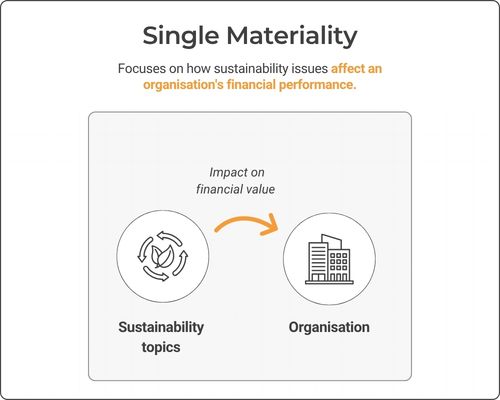
Single materiality focuses on the impact of sustainability issues on the organisation itself. Following this approach, sustainability information is considered material when it could reasonably influence decisions made by investors, lenders, or other providers of capital. This is the perspective adopted by the ISSB’s IFRS Sustainability Disclosure Standards, which are explicitly designed to provide decision-useful information to investors and lenders regarding sustainability-related risks and opportunities.
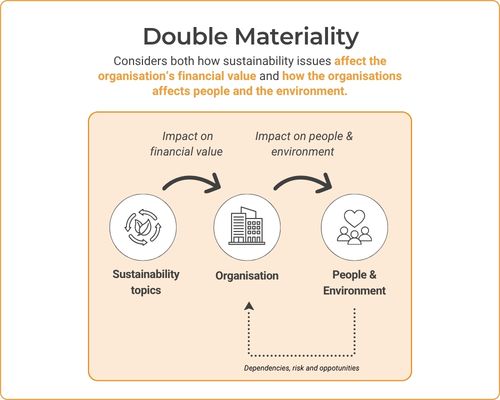
Double materiality incorporates this financial perspective but adds a second dimension of ‘impact materiality.’ Organisations must assess not only how sustainability issues might affect business performance, but also how their operations affect communities and ecosystems around the world. Under the CSRD framework, a sustainability matter is considered ‘material’ to the business if it is material from either the financial perspective or the impact perspective.
The distinction between these approaches is significant. For example, a single materiality assessment may identify climate-related physical risks as material to a business because flooding could disrupt operations and result in repair costs. A double materiality assessment would additionally examine the organisation’s contribution to climate change through its own emissions and value chain activities. If substantial, this impact on the global climate may also be considered material, even if the immediate financial consequences of these emissions are not yet evident.
This broader perspective recognises that all businesses have an obligation to understand and manage their sustainability impacts, and that many of these issues may eventually become financial risks themselves. Environmental degradation, resource scarcity, labour rights violations, and biodiversity loss are often seen as purely external impacts, but may ultimately affect market access, operating costs, financing conditions, customer behaviour, or corporate reputation.
The Strategic Limitations of Single Materiality
Single materiality has been the predominant approach for years for several reasons. It is generally simpler to implement, easier to align with mainstream financial reporting systems, and the relevance to investor decision- making is readily apparent. For organisations seeking to meet investor disclosure expectations and requirements, it provides a practical framework.
However, its principal limitation is its sole focus on the consequences of sustainability issues, without consideration of their causes. A single materiality assessment asks only whether an issue is likely to affect a business financially. In practice, this can mean that risks are recognised only after they become financially significant. Many emerging sustainability issues may therefore be underrepresented because their financial implications remain uncertain, delayed, or difficult to quantify (but nevertheless relevant to a wide range of stakeholders). Organisations relying solely on financial materiality risk becoming reactive rather than proactive.
Consider the example of biodiversity loss. For many businesses, the impacts of biodiversity loss may not currently appear financially material because they are diffuse, gradual, and externally absorbed. Yet growing scientific evidence links biodiversity decline to agricultural productivity risks and ecosystem instability, and it is likely to require future regulatory intervention. A purely financial perspective asks, ‘does this (external) issue affect our business?’ whereas an impact materiality perspective asks, ‘do our actions impact a system that we ultimately depend on?’ Single materiality implicitly treats the firm as an entity affected by the world, but does not recognise that it is simultaneously influencing the world around it in a strategically relevant way.
Similarly, social impacts within supply chains may initially appear external or irrelevant to corporate financial performance. However, labour abuses, unsafe working conditions, and community conflicts can rapidly generate litigation costs, project delays, procurement restrictions, and reputational damage. Even if these impacts cannot currently be reliably quantified, they can affect reputational legitimacy among non-investor stakeholder groups and social license-to- operate dynamics.
A single materiality approach tends to focus on what is priced in markets and easily assessed. This can lead to reduced strategic optionality over time, as firms underinvest in resilience and continue to undermine the social and environmental systems that they and the global economy rely upon.
Double Materiality as an Enhanced Risk Management Tool
One of the strongest cases for adopting a double materiality perspective lies in its ability to improve risk identification and management. By examining both sustainability impacts and financial consequences, organisations develop a more extensive understanding of their exposure to emerging sustainability risks. By widening the ‘risk perimeter,’ firms often discover dependencies and vulnerabilities that conventional risk assessments may overlook.
This more comprehensive approach to the identification of material issues is particularly important in an environment characterised by accelerating regulatory change. Carbon pricing mechanisms, extended producer responsibility schemes, supply-chain due diligence legislation (CSDDD), and human rights regulations are increasingly converting previously external impacts into direct financial liabilities.
Organisations that identify these issues early are generally better positioned to adapt than those responding after regulatory or market pressures emerge.
Financial Performance and Long-Term Value Creation
The relationship between sustainability performance and financial performance has been examined extensively over the past two decades. While findings vary by sector and methodology, available evidence suggests that strong sustainability performance is generally associated with improved financial outcomes over long-term time horizons.
A comprehensive review conducted by the NYU Stern Center for Sustainable Business and Rockefeller Asset Management examined more than 1,000 research papers published between 2015 and 2020. The study found a predominantly positive relationship between ESG performance and corporate financial performance, with stronger effects observed over longer investment horizons. Positive outcomes were particularly evident in areas such as operational peformance performance, risk management, and cost of capital.
Although this correlation does not prove that robust sustainability performance directly produces such outcomes, these findings support the argument that organisations that systematically identify and manage their sustainability impacts often demonstrate stronger management quality, improved operational efficiency, and enhanced resilience.
Double materiality assessments can strengthen ESG performance by improving the quality of information available for strategic decision-making. For example, a company conducting a double materiality assessment may identify significant water-use impacts within its operations. Under a single materiality approach, action may be justified only if water scarcity presents an immediate financial risk. Adopting the lens of double materiality, the company is more likely to evaluate broader ecosystem impacts, future resource dependencies, and community concerns. This wider perspective may inform investment decisions that promote efficiency, circularity, or alternative technologies before scarcity becomes a direct constraint on the business.
In this sense, double materiality can function not only as a critical input into risk assessment processes but also as an opportunity identification mechanism.
Capital Markets and Stakeholder Expectations
While single materiality is currently the most common framework for investor-focused disclosure standards, capital markets are becoming more interested in information extending beyond narrow financial considerations. Institutional investors, lenders, insurers, customers, and regulators increasingly recognise that environmental and social impacts entail future financial consequences. Disclosure of double materiality assessment results allows interested stakeholders an enhanced perspective on these matters.
Double materiality assessments can also improve communication with a broader stakeholder base. Rather than presenting sustainability issues solely through the lens of financial effects on the business, organisations can demonstrate how they understand and manage their own societal and environmental impacts. This broader perspective helps strengthen stakeholder trust, supports access to sustainable finance, and maintains social licence to operate. These benefits are often difficult to quantify precisely, but they can materially influence business performance over time.
Double materiality is not meant to replace financial materiality. Rather, it incorporates and extends this approach. Financial risks are clearly very relevant to many stakeholder groups and remain central to decision-making. Under a double materiality framework, these risks are simply analysed within a wider system of relationships and dependencies.
Conclusion
For organisations focused solely on regulatory compliance or short-term investor reporting, a single materiality approach may appear sufficient. However, the increasing interdependence of environmental, social, regulatory, and economic systems is exposing the limits of a purely financial perspective. The growing adoption of the double materiality framework reflects a maturing approach to materiality assessment and a widespread recognition of the interconnectedness of risks, opportunities, impacts, and dependencies. By identifying impacts and dependencies before they become liabilities and recognising opportunities before they become market expectations, organisations can improve strategic decision-making and strengthen their ability to navigate an increasingly complex business environment.
Once peripheral concerns, sustainability-related issues have now become central to the formulation of corporate strategy. Double materiality provides a simple framework for the proactive identification of material risks, opportunities, impacts, and dependencies, allowing for enhanced resilience and enduring value creation.
References
- European Financial Reporting Advisory Group (EFRAG) (2024) ESRS Implementation Guidance 1: Materiality Assessment (IG 1). Brussels: EFRAG.
- IFRS Foundation (2023) IFRS S1 General Requirements for Disclosure of Sustainability-related Financial Information and IFRS S2 Climate-related Disclosures. London: IFRS Foundation.
- European Union (2022) Directive (EU) 2022/2464 of the European Parliament and of the Council of 14 December 2022 amending Regulation (EU) No 537/2014, Directive 2004/109/EC, Directive 2006/43/EC and Directive 2013/34/EU as regards corporate sustainability reporting. Official Journal of the European Union, L322, pp. 15–80.
About the author
Peter is a Principal Consultant at Energise and is dedicated to protecting the natural world that he loves, both for himself and for future generations.